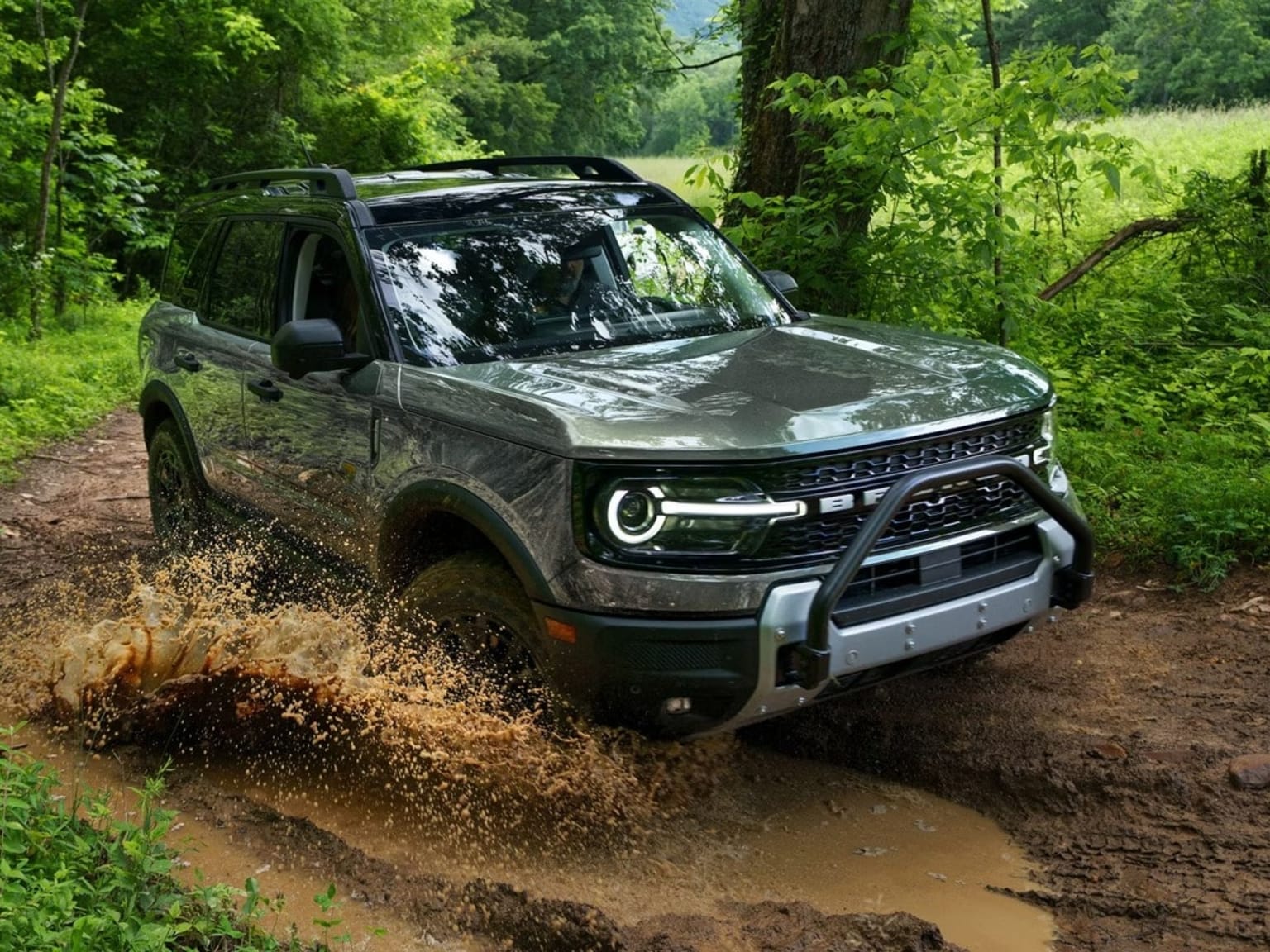
Bronco G.O.A.T. Modes: How Ford’s Off-Road Drive Modes Work
A trail can change faster than you expect. Hard-packed dirt becomes loose sand. A smooth path turns rocky. Then the afternoon rain shows up and changes the grip all over again.
That’s exactly why Bronco G.O.A.T. Modes exist.
Short for “Goes Over Any Type of Terrain,” the system gives the Bronco selectable drive settings for different conditions. Depending on the mode and equipment, the vehicle can adjust throttle response, transmission behavior, traction and stability controls, four-wheel-drive settings, and other systems.
For anyone wondering what G.O.A.T. Mode is on a Bronco, think of it as giving the SUV a head start on adapting to what’s under the tires.
Think of G.O.A.T. Modes as Presets, Not Magic Buttons
The easiest way to understand Bronco G.O.A.T. Modes is to think of them as coordinated presets.
Instead of asking you to individually change multiple vehicle settings, selecting a mode tells the Bronco what type of driving you’re about to do. The vehicle then adjusts compatible systems around that situation.
That doesn’t mean selecting Rock Crawl suddenly makes every trail easy. Tires, driver judgment, ground clearance, four-wheel-drive hardware, and conditions still matter.
That distinction is important for Ford Bronco off-roading. G.O.A.T. Modes help you use the Bronco’s capability more effectively. They don’t replace good decisions behind the wheel.
Five Modes or Seven? It Depends on the Bronco
The 2026 lineup doesn’t give every trim the same Bronco G.O.A.T. Modes.
Base, Big Bend, Outer Banks, and Heritage Edition models feature five: Normal, Eco, Sport, Slippery, and Sand.
Badlands, Stroppe Edition, and Raptor expand the system to seven with Normal, Eco, Sport, Slippery, Off-Road, Rock Crawl, and Baja.
That difference makes sense when you look at how the trims are positioned. The more trail-focused Broncos pair their specialized modes with additional off-road hardware designed for tougher terrain.
So don’t choose a Bronco just because it has the longest mode list. Choose one whose equipment matches where you actually plan to go.
Normal to Slippery: Useful Before the Trail Even Starts
Some Bronco G.O.A.T. Modes are just as relevant on pavement.
Normal is built around everyday driving. Eco favors efficiency. Sport sharpens the experience for more responsive road driving.
Then there’s Slippery mode, which becomes especially relevant when Georgia weather turns ugly. Ford says it lowers throttle response and optimizes shifting for firm surfaces covered with loose or slippery material. Depending on the Bronco’s four-wheel-drive system, it can also select an appropriate 4x4 setting by default.
That means Ford Bronco off-roading isn’t the only time the terrain-management system earns its keep. Some settings can help before you ever leave pavement.
Sand and Off-Road Handle the Loose Stuff Differently
Sand mode is available on several 2026 Bronco models and prepares the vehicle for loose terrain where maintaining momentum matters.
The more specialized Off-Road mode found on Badlands, Stroppe Edition, and Raptor is designed for mixed terrain. This is where Bronco G.O.A.T. Modes start becoming especially useful when one trail throws several different surfaces at you.
Rather than treating sand, gravel, mud, and uneven ground like an ordinary road, the Bronco can change its response around that environment.
For drivers interested in Ford Bronco off-roading, the key lesson is simple: choose the mode for the surface you’re actually driving on, not the one with the coolest name.
Rock Crawl and Baja Have Opposite Jobs
Rock Crawl and Baja show just how different two off-road situations can be.
Rock Crawl is about slow, deliberate control. On applicable Broncos, it uses 4L and adjusts throttle and transmission response to help the driver work through obstacles. The rear electronic locking differential engages, and properly equipped models can disconnect the stabilizer bar for improved articulation.
Baja is built for speed over loose terrain. Ford says the mode optimizes throttle response and torque delivery for high-speed off-road driving, with 4H as the default four-wheel-drive setting.
Those two Bronco G.O.A.T. Modes aren’t simply different levels of the same thing. Rock Crawl wants precision. Baja wants momentum.
Using the Modes Is the Easy Part
If you’re wondering about what G.O.A.T. Mode is on a Bronco because the controls seem complicated, Ford keeps the basic operation straightforward.
Rotate the drive-mode controller once to bring up the selection menu in the instrument cluster, then rotate it again to choose and engage the desired mode. Ford also recommends returning to Normal, Eco, Sport, or Slippery when you’re back on regular roads after using off-road-specific settings.
The real skill isn’t learning how to turn the dial. It’s learning which Bronco G.O.A.T. Modes match the terrain in front of you.
Build Your Bronco Around Where You Want to Go
If your adventures involve mostly pavement with occasional sand or dirt, you may not need every specialized mode available. If rocky trails, uneven terrain, and more serious Ford Bronco off-roading are part of the plan, Badlands, Stroppe Edition, or Raptor may deserve a closer look.
At J.C. Lewis Ford Statesboro, our team can help you explore current Bronco inventory and see which modes, 4x4 systems, packages, and trail hardware come with the models you’re considering.
Get behind the wheel, learn the controls, and choose the Bronco built for the places you actually want to explore.
Because Bronco G.O.A.T. Modes are most useful when the technology matches the adventure, not just the spec sheet.