Ford Explorer Interior: Seating, Space & Cabin Features Shoppers Should Know
Three-row SUVs look spacious from the outside. The real test starts when everyone gets in.
Can adults use the second row comfortably? Is the third row useful beyond short trips? What happens to your cargo space when every seat is occupied?
The Ford Explorer interior is designed around those everyday questions. For 2026, Explorer offers three rows, seating for six or seven depending on configuration, and enough flexibility to shift between people-hauling and cargo-hauling without turning every trip into a packing puzzle.
The Ford Explorer interior dimensions help make that flexibility possible, giving families around Statesboro useful room for passengers and gear without making every drive feel crowded.
Six Seats or Seven? Start With the Second Row
The 2026 Explorer can seat six or seven people depending on trim and equipment.
Most models come standard with second-row captain’s chairs for six-passenger seating, while ST-Line uses a second-row bench as standard. A bench seat is available on several other models if you need room for seven.
That choice changes how the Ford Explorer interior works for your family.
Captain’s chairs make it easier to separate passengers and move between the second and third rows. A bench gives you one more seating position, which can matter for larger families, carpools, or weekends when everyone brings a friend.
Before choosing, think less about the maximum number and more about who actually rides with you.
The Interior Dimensions That Matter Most
You don’t need every measurement on the spec sheet. A few tell most of the story.
Depending on trim, the Ford Explorer interior dimensions provide about 42.9 to 43 inches of front legroom, roughly 37 to 37.5 inches in the second row, and 31.8 inches in the third row. Headroom reaches up to 40.7 inches in front, 40.5 inches in the second row, and 38.9 inches in the third.
That makes the first two rows the natural home for taller passengers, while the third row works well when you need the extra seating.
Passenger volume also varies slightly by trim. Active and ST-Line models offer up to 150.3 cubic feet, while equipment differences on ST, Tremor, and Platinum change that number somewhat.
The takeaway: the Ford Explorer interior is roomy, but trim and seating configuration still matter.
The Third Row Doesn’t Have to Stay Up
Here’s where Explorer becomes much more useful.
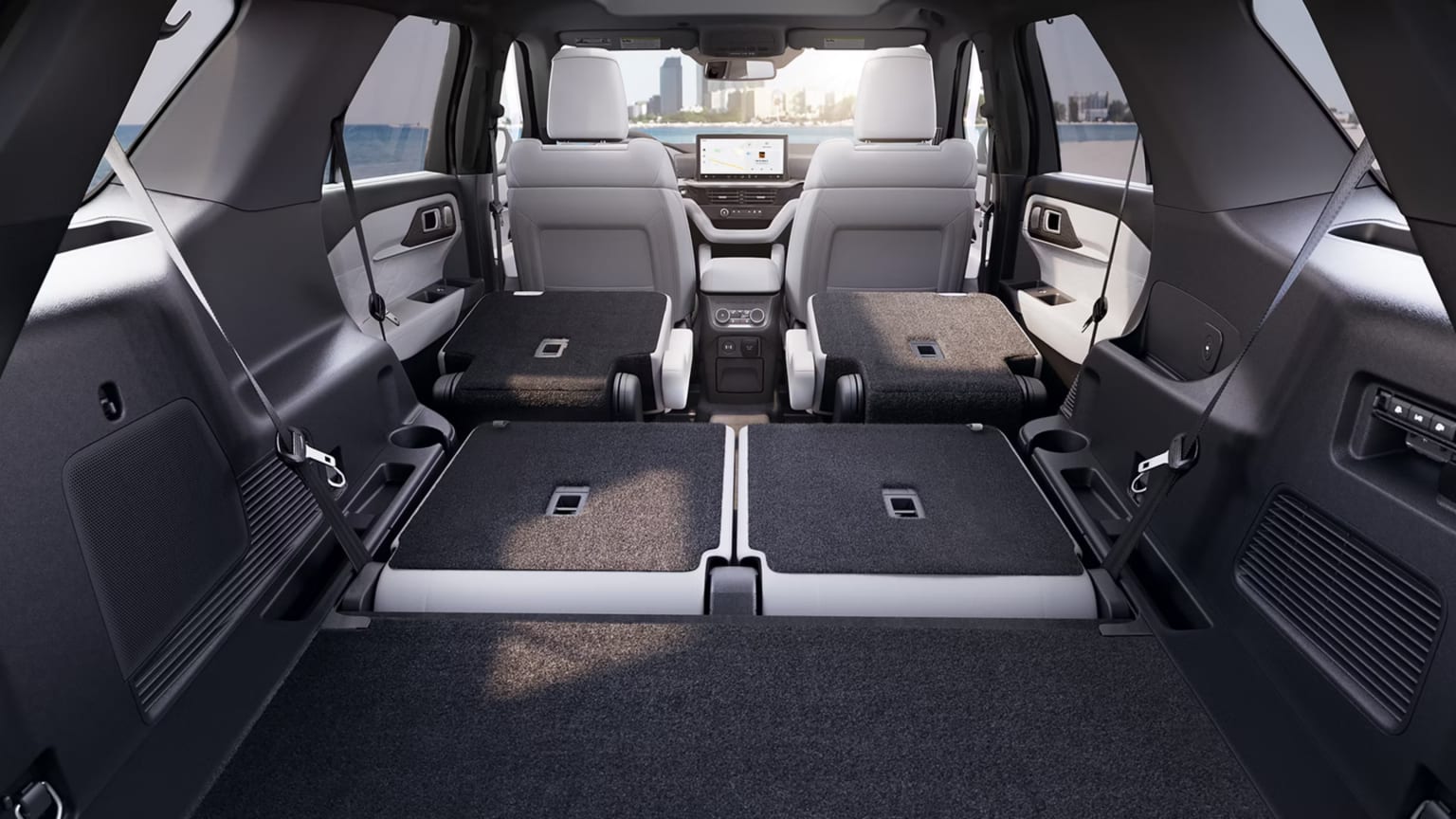
With all three rows in place, Ford Explorer trunk space measures 16.3 cubic feet across the 2026 lineup. Fold the rear seating and maximum cargo capacity grows to as much as 85.8 cubic feet on Active and ST-Line models, with other trims offering up to 85.3 cubic feet.
That means the same SUV can handle very different Saturdays.
Leave all three rows up for a family outing. Fold the third row for luggage, sports gear, or a bigger grocery run. Drop more seating when furniture, home-improvement supplies, or bulky cargo takes priority.
The Ford Explorer interior earns its keep by letting you decide whether today is about passengers or stuff.
Cargo Space Is More Than the Biggest Number
Maximum capacity sounds impressive, but most families don’t drive around with every rear seat folded.
That’s why Ford Explorer trunk space behind the third row matters. Those 16.3 cubic feet give you usable room while all three rows remain available.
For families who regularly travel with six or seven people plus luggage, the Ford Explorer interior is worth seeing in person rather than judging only by the maximum cargo figure.
The same goes for Ford Explorer interior dimensions. A spec sheet can tell you the numbers, but loading your stroller, sports bags, or travel gear tells you whether the layout works for your routine.
The Cabin Is Built for More Than Sitting
Space matters, but so does what everyone can do once they’re inside.
Depending on trim, the 2026 Explorer offers a 13.2-inch center display with Ford Digital Experience, a 12.3-inch instrument cluster, wireless Apple CarPlay and Android Auto compatibility, tri-zone automatic climate control, and USB ports extending into all three rows on models such as ST-Line and ST.
Higher trims can also add features such as heated second-row seats, ventilated front seats, premium B&O audio, a panoramic glass roof, and PowerFold third-row seating. Equipment varies by model and package.
Those details help the Ford Explorer interior feel less like one big cabin and more like three usable rows.
Captain’s Chairs or Bench? There’s No Universal Winner
This decision comes down to how your family moves.
Choose captain’s chairs if easier third-row access, more personal space, and a clear aisle matter most. Choose the bench if maximizing passenger capacity is the priority.
The Ford Explorer interior dimensions don’t tell you which arrangement is better because that depends on your passengers. The Ford Explorer interior itself is flexible enough to work either way.
A family with two kids may love captain’s chairs. A household regularly carrying five kids, grandparents, or teammates may appreciate that seventh seat much more.
This is one of those choices that becomes obvious once everyone sits inside.
Bring the Family to J.C. Lewis Ford Statesboro
You can study measurements all day, but an SUV interior makes more sense when the people and gear that matter are actually in it.
J.C. Lewis Ford Statesboro currently lists 2026 Explorer models in several configurations, including Active and Platinum examples, with inventory changing as vehicles arrive and sell.
Explore our current Explorer inventory online, then visit us in Statesboro to experience the Ford Explorer interior firsthand. Try the second row. Climb into the third. Open the liftgate and picture your normal cargo back there.
The right three-row SUV isn’t the one with the biggest number on paper. It’s the one that still works when everyone, and everything, comes along.